Thermal ablation of thyroid nodules
Thermal ablation of thyroid nodules is an ideal solution for those experiencing symptoms such as shortness of breath or difficulty swallowing, or for those with an unsightly appearance. This condition can now be treated in minutes without surgery or general anesthesia.
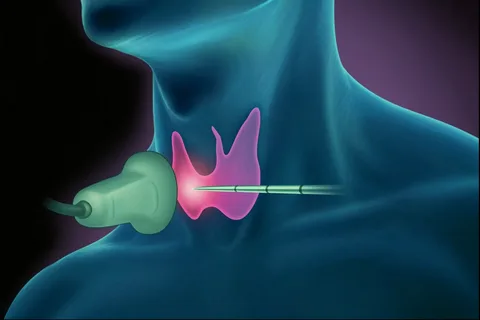
In this technique, thyroid nodules are ablated under ultrasound guidance, eliminating the need for general anesthesia. After the ablation procedure, which takes no more than 30 to 40 minutes, the patient can return home and resume their daily activities immediately without a hospital stay.
Advantages of thermal ablation compared to surgery:
No surgical incision: The procedure is performed using a very fine needle under ultrasound guidance.
Local anesthesia: You will be awake and able to speak with your doctor throughout the procedure.
Preservation of thyroid function: Unlike surgery, thermal ablation preserves healthy thyroid tissue, often eliminating the need for lifelong hormone replacement.
Quick return to normal life: You can leave the hospital the same day and immediately resume your work and normal activities.
Ideal cosmetic results: The procedure leaves no scars or surgical marks on the neck.
Frequently Asked Questions about Thyroid Nodule Cauterization:-
1. Is this technique suitable for all types of thyroid nodules?
This technique is primarily used for benign nodules that cause symptoms or affect the patient's appearance. It is also an excellent solution for active nodules that cause hyperthyroidism (overactive thyroid) and is used in certain cases of very small cancerous tumors in patients who prefer not to undergo surgery.
2. Is the procedure painful?
The procedure is performed under local anesthesia, so the patient does not feel any pain during the procedure. The patient may feel slight pressure or a mild tingling sensation in the neck area, which disappears quickly afterward.
3. How long does the procedure take?
The cauterization process itself takes between 15 and 30 minutes, depending on the size and number of nodules. The patient can return home after two hours of observation.
4. When will the final results be visible?
The nodules begin to shrink gradually immediately after the procedure. Noticeable results appear within the first three months, and the shrinkage continues until it reaches its maximum (more than 50-80% of the original size) within a year.
5. Will I need to take thyroid medication after cauterization?
In most cases, the patient does not need to take thyroid hormones (levothyroxine) because the cauterization targets only the nodule and preserves the healthy lobes of the gland to function efficiently. This is the major advantage compared to surgical removal of the gland.
6. Are there any potential complications?
Thermal cauterization is considered one of the safest procedures worldwide. Complications are very rare and may include a temporary change in voice or minor bruising at the needle insertion site, symptoms that disappear spontaneously within a few days.