Port-A-Cath Insertion
Patients undergoing chemotherapy who struggle to find suitable veins for repeated injections and experience anxiety and fear with each chemotherapy session or IV infusion offer interventional radiology the ideal and safest solution for receiving chemotherapy safely and comfortably: the implantation of a port-a-cath device under close supervision and using modern interventional radiology techniques.
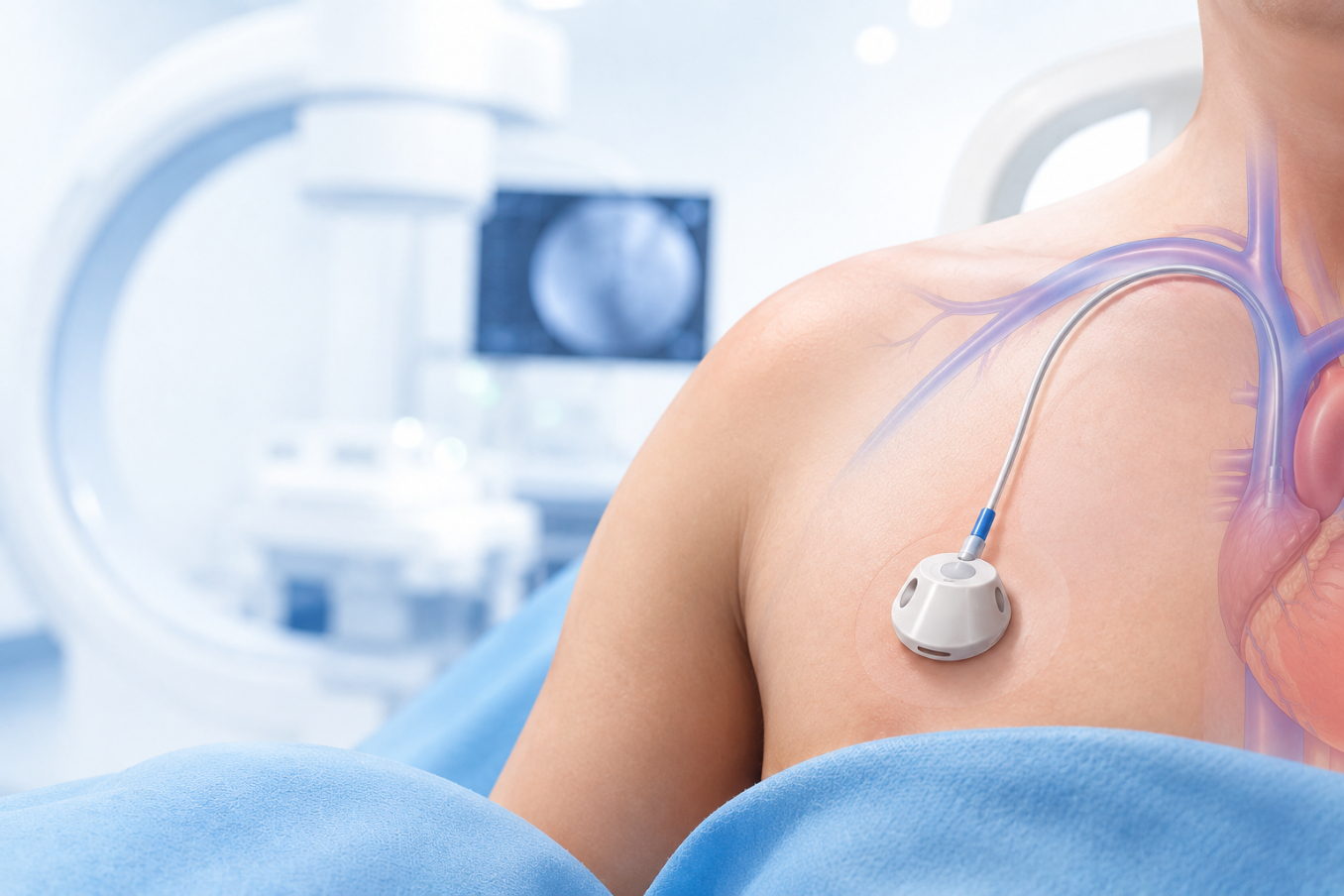
The port-a-cath is a very small medical device implanted entirely under the skin (usually in the upper chest area). It consists of a small reservoir connected to a thin tube that leads directly to one of the major veins.
Port-a-cath implantation eliminates the repeated pain of constantly pricking veins to find veins in the hands and feet. It also provides greater safety by protecting peripheral veins from inflammation and damage caused by potent chemotherapy drugs.
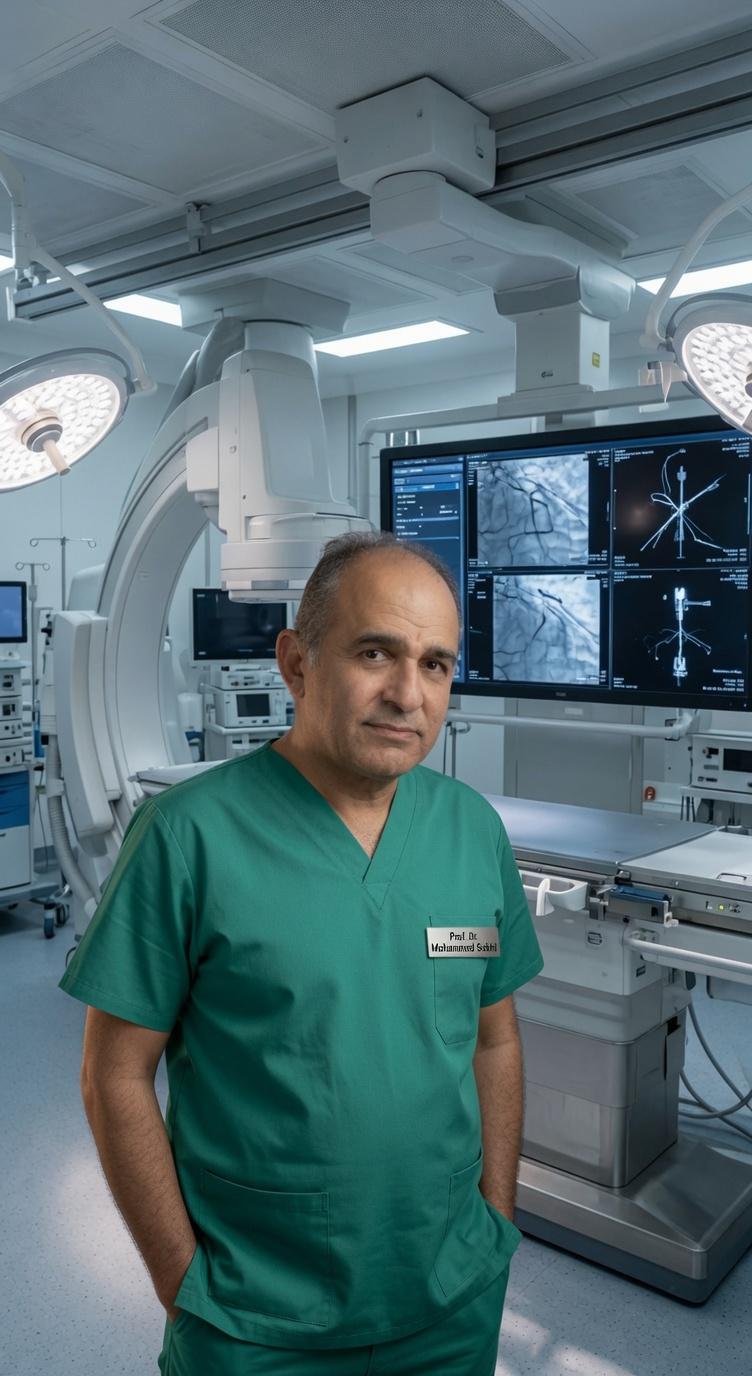
The implantation is performed with extreme precision under live ultrasound and X-ray guidance, ensuring the highest success rates and the fewest complications compared to traditional surgery.
The device is completely hidden under the skin, allowing the patient to resume their normal activities, shower, and move freely after the minor incision has healed. The insertion of a port-a-cath makes the treatment journey easier. It's a quick and safe procedure that helps you implement your treatment plan with complete comfort and peace of mind.
Frequently Asked Questions about Port-a-Caths (FAQs)
1. How is the port-a-cath inserted? Is general anesthesia required?
The procedure is very simple and takes only about 20 to 30 minutes. It's performed under local anesthesia with a mild sedative to ensure you don't feel any pain or discomfort, and in most cases, general anesthesia is not required.
2. When can I start using the device after insertion?
Generally, the port-a-cath can be used immediately after insertion if needed, but it's usually preferable to wait a few days until the small incision has completely healed to ensure greater patient comfort.
3. Can I feel the device under my skin? Is it painful?
After the incision heals (within a few days), you won't feel any pain. You'll only notice a very small, coin-sized protrusion under your skin, which is perfectly normal and won't interfere with your movement or sleep.
4. How is the treatment administered?
The medical staff uses a special needle inserted directly through the skin into the port-cath reservoir. The puncture is virtually painless compared to pricking a regular vein in the hand.
5. How do I care for the port-cath?
The device is very comfortable because it is under the skin and does not require daily changes. The only maintenance required is flushing the device with a sterile heparin solution after each use, or every 4 to 6 weeks if not in use, to prevent blockages.
6. How long can the device remain in the body?
The port-cath can remain safely in the body for months or even several years as long as it is used and cared for correctly and as long as the patient requires it in their treatment plan.
7. How is the device removed after the treatment period is complete?
When your doctor determines that the device is no longer needed, it is removed using the same simple procedure; a very short procedure performed under local anesthesia in the interventional radiology room.
Do you have any further questions or would you like to book an appointment? Don't hesitate to contact us; our medical team is ready to answer all your questions and help you in your next step towards recovery.